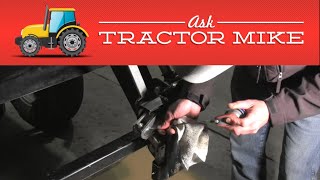
Focuses on three annual maintenance tasks Mike considers underemphasized in owner's manuals: lubricating loader quick-attach hardware, seat rails, and hitch components with WD-40; setting tire pressure to specific ranges (12-15 PSI rear, near-max front with a loader); and torque-checking lug nuts, drawbar, roll bar, and loader bolts. Practical and hands-on rather than comprehensive, with real numbers given. Best for compact-tractor owners wanting a quick checklist beyond standard oil-and-filter service. Note: WD-40 is a paid sponsor.
Tractor Mike is a longtime tractor-industry insider with decades of hands-on experience in the equipment business. He built his channel to help first-time and rural buyers make confident decisions, and his guidance comes from that deep, long-term background rather than a sales pitch.
What this video covers
Spray WD-40 on loader quick-attach moving parts and grease zerks
Lubricate seat rails and weight-adjustment spring threads with WD-40
Spray hitch parts: lower link balls, stabilizers, top link, pins
Set rear tire pressure to 12-15 PSI for better wear and ride
Keep front tires near max PSI (28 on this tractor) when running a loader
Torque-check lug nuts, drawbar bolts, roll bar bolts, and loader bolts annually
Questions this video answers
What tire pressure should I run on a compact tractor's rear tires?
Mike recommends keeping rear tire pressure between 12 and 15 pounds, since dealers and factories often overinflate them, causing a worn dust ring in the center of the tread.
What front tire pressure should I use if my tractor has a loader?
Keep front tires near the maximum recommended pressure when running a loader; on Mike's tractor that maximum is 28 pounds, which helps even out tire wear.
What bolts should be torque-checked during annual tractor service?
Check lug nuts or bolts on front and back wheels, rim-to-hub bolts, drawbar bolts, roll bar bolts, and loader bolts, since loader bolts fail most often due to vibration and stress.
Where should I apply WD-40 during annual tractor maintenance?
Spray the loader quick-attach moving parts, seat rails and weight-adjustment spring threads, and hitch components including lower link balls, stabilizers, top link, and pins.