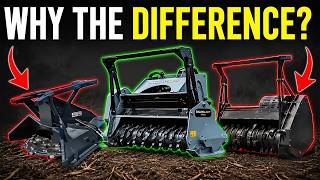
This isn't a tractor or attachment review but a general-knowledge piece on forestry mulcher teeth and setup: carbide vs. other tooth types, why aggressive teeth can backfire, how to read chip size, sound, and vibration to diagnose wear, plus a specialty-tool anecdote for swapping teeth. No specific machine is walked around or demoed. Best for mulcher owners/operators wanting conceptual maintenance insight, not buyers comparing specific models.
Presented by Tractor Ready as general operator know-how, with personal commentary suggesting hands-on mulching experience rather than a dealer or manufacturer perspective.
What this video covers
Overly aggressive teeth can bog the engine and drop rotor speed
Momentum and a balanced drum cut better than constant biting
Carbide teeth last longer but are expensive and chip when they fail
Chip size and debris flow reveal tooth wear and setup problems
Unbalanced drums cause bearing damage, oil leaks, and hydraulic motor stress
Pros change drum and tooth styles based on wood type and job
Questions this video answers
Why would a forestry mulcher perform poorly even with new teeth?
Usually it is not the mulcher itself but the setup, including tooth type, drum configuration, and matching the teeth to the job and wood conditions.
Is a more aggressive tooth always better for cutting?
Not necessarily. Aggressive teeth can cut deeper but drop rotor speed, load the hydraulics harder, bog the engine, and cause the machine to lose momentum.
How can you tell if a mulcher's teeth are worn or the drum is unbalanced?
Listen for a deep bogging sound, feel for vibration, and watch chip size and how debris exits the mulcher as the cutter head runs.
What happens if you ignore worn or damaged mulcher teeth?
An unbalanced drum can damage bearings, cause oil seal leaks, stress hydraulic motors, wear shafts, and potentially damage the whole mulching head.