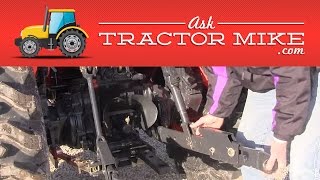
Mike stands between two same-brand, same-horsepower tractors at a dealership and walks through exactly what justifies a $3,000 price gap: transmission type and synchronization, hydraulic pump flow rates with actual GPM numbers, remote hydraulics availability, draft control, tilt steering, and rear three-point conveniences. It's a brisk feature-by-feature comparison with enough real numbers to be genuinely useful for anyone deciding between entry-level and mid-tier models of the same line.
Tractor Mike is a longtime tractor-industry insider with decades of hands-on experience in the equipment business. He built his channel to help first-time and rural buyers make confident decisions, and his guidance comes from that deep, long-term background rather than a sales pitch.
What this video covers
Pricier tractor has 12x12 synchronized shuttle transmission versus 8x8 constant mesh
Synchronized shuttle lets you shift forward to reverse without stopping
Hydraulic pump flow is 16.8 GPM versus 13.18 GPM, 25% more flow
Remote hydraulic connections standard on pricier tractor, absent on cheaper one
Pricier tractor adds tilt steering, draft control, and a rear lever for three-point height
Pricier tractor has extendable lower link arms versus fixed arms
Questions this video answers
What is the difference between a 12x12 and 8x8 tractor transmission?
The 12x12 has 12 forward and 12 reverse speeds and is synchronized, letting you shift between forward and reverse while moving. The 8x8 is constant mesh, so you must stop completely before reversing.
Does more hydraulic GPM make a loader faster?
Yes. The tractor with 16.8 gallons per minute has 25% more flow than the one with 13.18 GPM, making the loader work noticeably faster.
What does draft control do on a tractor?
Draft control senses when an implement like a plow digs into soft ground and automatically brings it back up. If you never do tillage, you don't need it.
Is it better to buy a tractor with remote hydraulics already installed?
Generally yes. If you need hydraulic flow to run a cylinder, it's often better to buy the more expensive tractor with remotes included rather than adding them later.