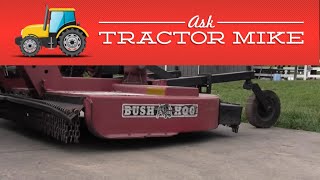
Focused entirely on one practical task: diagnosing and correcting improper tail-wheel height on a rotary cutter so it stops double-cutting and overworking the tractor. Mike explains the front-low, back-high pitch principle, cites the owner's manual as the reference, and walks through a clever lumber-block method (2x4s and 2x6s as height guides) to set the rake accurately. Best for owners troubleshooting a sluggish brush-hog setup.
Tractor Mike is a longtime tractor-industry insider with decades of hands-on experience in the equipment business. He built his channel to help first-time and rural buyers make confident decisions, and his guidance comes from that deep, long-term background rather than a sales pitch.
What this video covers
Symptom: tractor works hard, uses lots of fuel, double-cuts material
Owner's manual calls for front 1 to 2 inches lower than back
Use a 2x4 (3.5 in) under front, 2x6 (5.5 in) under back as guides
Drop tail wheels down until they touch the ground on the blocks
Skid plates sit an inch lower than the blades when measuring
Getting close to the manual's pitch is good enough to work
Questions this video answers
How do you know if your brush hog tail wheels are set wrong?
The tractor works hard and burns a lot of fuel while cutting, and the cutter throws material forward then cuts it again instead of letting it go out the back.
How do you set the tail wheel height on a rotary cutter?
Check the owner's manual for the recommended front-to-back pitch, then use lumber blocks like a 2x4 up front and a 2x6 in back to set that rake, dropping the tail wheels to touch the blocks.
What pitch should a rotary cutter have front to back?
The owner's manual on this cutter called for the front to be about 1 to 2 inches lower than the back so cut material clears out the rear.