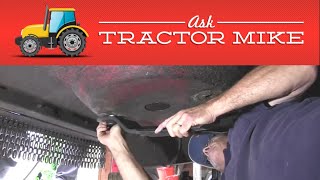
Part of a series on brush-cutter blade maintenance, this video focuses specifically on reinstallation, a step that's easier to botch than most owners realize. It covers blade orientation on single vs. dual-gearbox cutters, using the owner's manual diagram and serial number to get the right parts, anti-seize application, torque expectations for real-world tools, and a safety reminder about working under lifted equipment. Most useful to first-timers replacing or resharpening blades on a rotary cutter.
Tractor Mike is a longtime tractor-industry insider with decades of hands-on experience in the equipment business. He built his channel to help first-time and rural buyers make confident decisions, and his guidance comes from that deep, long-term background rather than a sales pitch.
What this video covers
Mark blades before removal since gearboxes may rotate opposite directions
Match cutting edge to arrow direction shown on cutter sticker or manual
Blade slope faces down toward the ground on most cutters
Take a photo of the serial number tag before ordering parts
Apply anti-seize to bolts and pins for easier future removal
Use jack stands, not tractor hydraulics, when working underneath the cutter
Questions this video answers
How do you know which way brush cutter blades go on?
Check the sticker on the cutter or the owner's manual diagram, which shows arrows for blade direction. The cutting edge should follow the arrow, and dual-gearbox cutters may rotate opposite ways on each side.
What happens if brush hog blades are installed upside down?
One side can end up cutting higher than the other. Most blades have a slope that should face down toward the ground to create a vacuum effect for cutting.
How tight should brush cutter blade bolts be torqued?
Specs call for 600 foot-pounds, but most homeowners and even dealership mechanics lack that tool. A lock washer and a good half-inch air impact will get them plenty tight.
Why is it important to bring the serial number when buying brush cutter blades?
Serial numbers can indicate production changes, so blade length or part number may differ. Taking a photo of the tag helps the dealer identify the correct parts.